
Myths & Legends of the Isle of Man: 7 Tales from Manx Folklore
· Gilo
In the Isle of Man, it pays to say hello to a bridge. If a black dog settles by the fire at Peel Castle, let it sleep. And if a voice starts up behind the farmhouse wall, there’s a chance it will introduce itself as a mongoose.
Manx folklore belongs to particular places: a castle passage, a roofless church, a bend in the road. Some stories turn up in Sophia Morrison’s Manx Fairy Tales, published in 1911. Others were told by people who remembered the events themselves. Here are seven tales to take with you around the island.
1. The Moddey Dhoo of Peel Castle
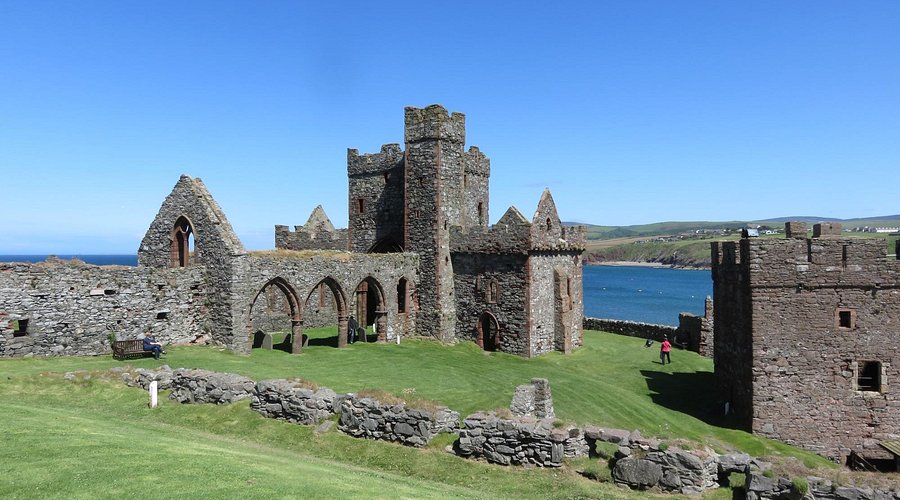
In an account recorded by George Waldron, a shaggy black dog used to appear at Peel Castle when the guards lit their candles. It would settle beside the fire. The men grew used to it, as you might grow used to any dog that had chosen the warmest spot in the room.
In the castle’s telling, one soldier boasts that he’ll go past the hound alone. His companions hear a scream. He comes back speechless and dies a few days later, leaving the rest of the garrison to wonder what he saw. Moddey dhoo means ‘black dog’ in Manx. You can hear the story on the castle’s audio guide, ideally before you reach the darker corners of the ruins.
2. Manannan and the island that vanished
Manannan mac Lir, the sea god of Manx tradition, had a way of dealing with unwelcome visitors. He could pull a cloak of mist over the island until it disappeared from sight. In one legend, the trick leaves St Patrick lost at sea until the calls of a curlew, a goat and a cockerel help him find his way ashore.
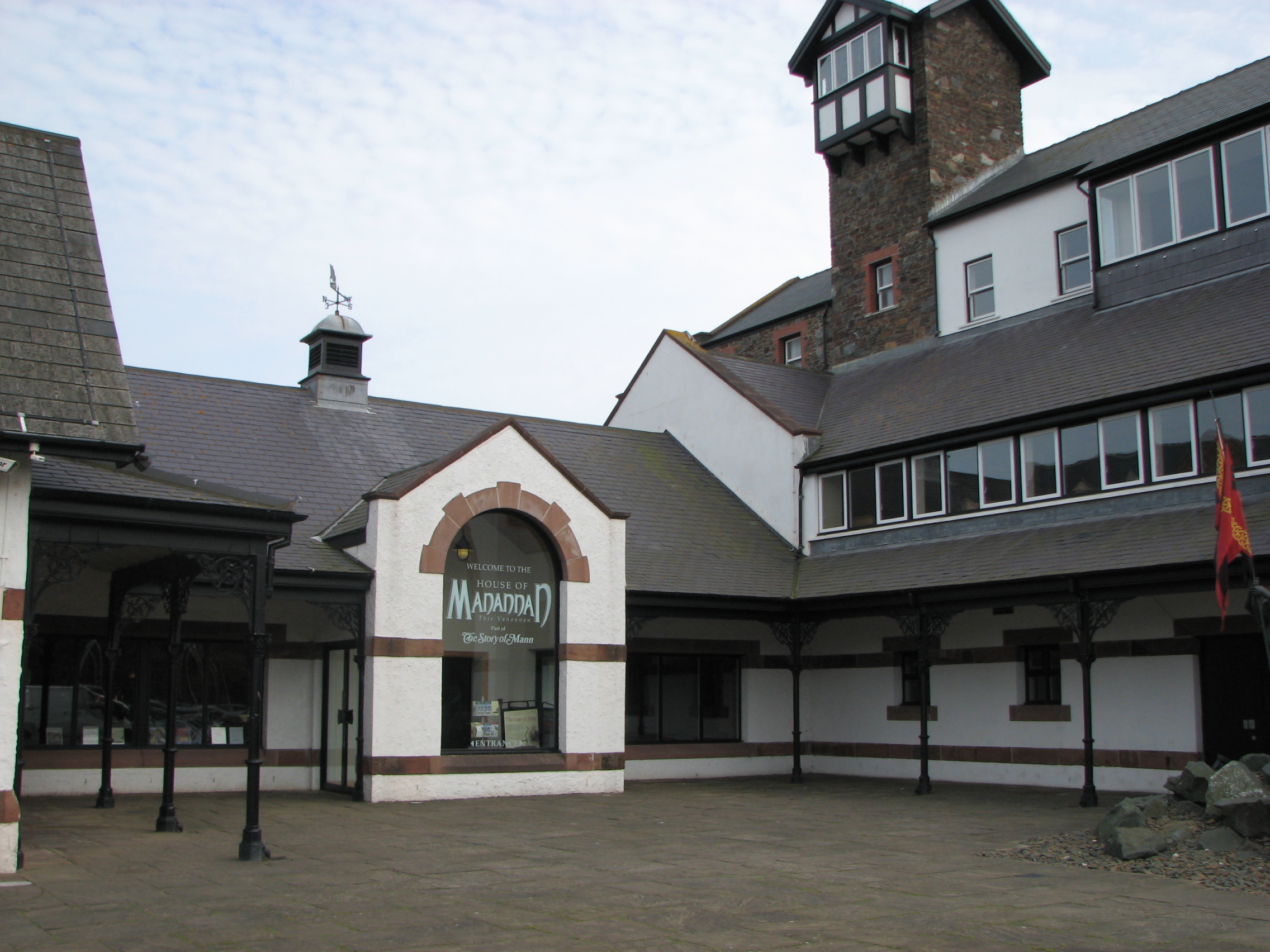
People still talk about Manannan’s cloak when the mist rolls in. You can meet the island’s mythical protector at the House of Manannan, where he guides visitors through the island’s Celtic, Viking and seafaring past. It’s an especially good stop when the mist is doing its work outside.
3. The Little People at Fairy Bridge
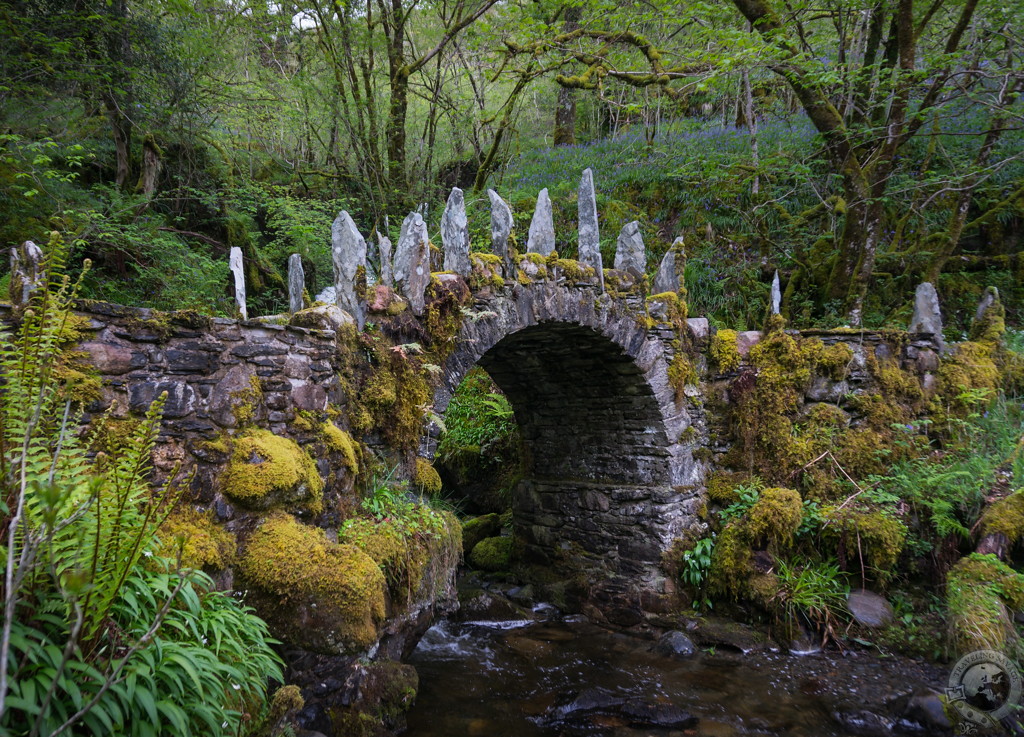
On the A5 between Douglas and Ballasalla, you may hear somebody in the car say ‘Hello, fairies!’ even though the only thing in sight is a little bridge. The greeting is for the mooinjer veggey, the Little People of Manx folklore. In the old stories they could help humans or play tricks on them, so a little courtesy seems a fair bargain.
The greeting takes about as long as the crossing. Try it as you pass on the way to Castletown or the airport, where anyone unfamiliar with the custom may have a question or two.
4. The Buggane of St Trinian’s and the tailor’s trousers
The old church at St Trinian’s near Greeba stands roofless. Folklore blames a buggane, a creature that took against the church and, in Sophia Morrison’s version, threw off its roof. Enter Timothy the tailor, who takes a bet that he can sit inside at night and sew a pair of breeches.
The buggane comes up through the floor. Timothy keeps stitching, then makes for the window. For a monster story, it’s remarkably concerned with whether a man can finish a pair of trousers on time. Culture Vannin has an audio retelling of the Buggane of St Trinian’s if you’d like to hear how he gets on.
5. The Fynoderee, a farmhand with strong opinions
Morrison’s Fynoderee of Gordon is an immensely strong farm helper with a few blind spots. Sent to gather sheep, he brings in a hare as well. From his point of view the little creature was simply the hardest member of the flock to catch.
The farmer later offers him a set of warm clothes. The Fynoderee takes offence and leaves. The story makes a good companion to a visit to Cregneash Folk Village, where you can see the cottages and learn about the kind of everyday farm work that creatures like this were said to do after dark.
6. Jinny the Witch and the turnip lanterns
Visit around 31 October and you might see carved turnips with candles inside. They’re part of Hop tu Naa, a Manx tradition with songs that vary around the island. One familiar version features Jinny the Witch, who flies over a house.
Manx researcher Hampton Creer suggested a real woman, Joney Lowney, as a possible inspiration. She faced accusations of witchcraft in the early 1700s. One witness claimed she flew out of the house in a vessel and returned with fish. Court records preserve the accusation. The turnip lanterns and songs show what later generations made of stories like it.
7. Gef, the mongoose who made himself at home
In the 1930s the Irving family of Doarlish Cashen, a farmhouse above Dalby, told visitors about a voice they attributed to a talking mongoose called Gef. He became known as the Dalby Spook. The story travelled as far as Peel, where, according to a later account, bus drivers set traps for him near their depot.
Culture Vannin recorded different memories of the affair. Kathleen Green, who knew the family and visited the farmhouse as a girl, thought it was a hoax. Her account is worth a listen for the way she remembers the excitement of going up to see what all the fuss was about.
A folklore afternoon in Peel
Start at the House of Manannan, then follow the harbour round to Peel Castle for the black dog’s story. Finish at Fenella Beach, below the castle walls, and see how quickly the headland disappears if the weather comes in. If you’re making a weekend of it, browse places to stay on the Isle of Man.
Read and listen to the original accounts
Sophia Morrison’s Manx Fairy Tales · Manx National Heritage’s Peel Castle audio guide transcript · Culture Vannin’s folklore sites with Visit Isle of Man · Hampton Creer’s interview on Jinny the Witch · Kathleen Green remembers the Dalby Spook · Culture Vannin’s Gef in Peel