
The Manx Language: Where It Came From and What to Say
· Gilo
Moghrey mie! That’s ‘good morning’ in Manx. By the end of this guide you’ll be able to greet someone, raise a glass and tell them you’re getting along nicely while still finding plenty to grumble about.
Where did the Manx language come from?
Manx Gaelic, known in Manx as Gaelg, developed on the Isle of Man from the early Gaelic spoken around the Irish Sea. It belongs to the Goidelic branch of the Celtic language family, alongside Irish and Scottish Gaelic. Written Manx developed its own spelling conventions, drawing heavily on English spelling. Compare the toast slaynt vie with Irish sláinte and you can see how differently the languages write related words.
Manx was once the island’s main everyday language. English gradually took over, particularly during the eighteenth and nineteenth centuries. Ned Maddrell, generally described as the last traditional native speaker, died in 1974. By then, people had already been learning from older speakers and recording their voices. You can still listen to Brian Stowell’s recordings of Ned Maddrell.
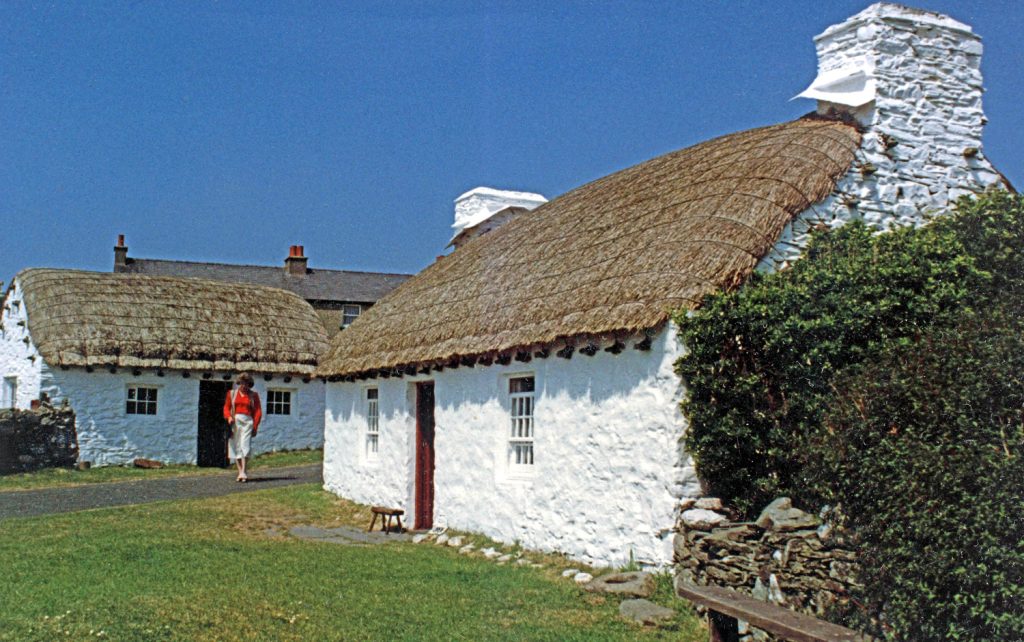
The revival carried those recordings and what learners had picked up into classrooms, conversation groups and family life. For a glimpse of the older language’s home, visit Cregneash Folk Village, one of the island’s last strongholds of traditional Manx.
Where is Manx still spoken?
The Isle of Man is the centre of the language today. At Bunscoill Ghaelgagh in St John’s, children learn the primary curriculum through Manx. There are adult classes and conversation groups around the island, including in St John’s and Peel. The 2021 census recorded 2,223 residents who said they could speak, read or write some Manx, a measure that includes people with different levels of fluency.
For visitors, two good occasions to hear it are Tynwald Day, when the titles and summaries of new laws are read on Tynwald Hill in Manx and English, and Cooish, the Manx language festival. Learn Manx lists public conversation sessions and links to radio programmes, so you can tune in from off-island too.
Find a conversation group · Explore Cooish and other community events · Listen to Manx radio programmes
Everyday Manx phrases to try
| Manx | Meaning | When to use it |
|---|---|---|
| Moghrey mie | Good morning | Your first greeting of the day. |
| Fastyr mie | Good afternoon or evening | Use it to greet someone from around lunchtime. |
| Kys t’ou? | How are you? | Add it after a greeting to start a conversation. |
| Mie dy liooar | Well enough | A suitably understated answer. |
| Gura mie ayd | Thank you | Say it to one person. To a group, use gura mie eu. |
| Slaynt vie! | Good health! / Cheers! | Use it for a toast. |
| Slane lhiat | Goodbye | Say it when parting from one person. |
| Oie vie | Good night | Save it for when you’re leaving late or turning in. |
For pronunciation, start with the recordings in the Learn Manx pocket guide. Try greeting one person with moghrey mie, then thank them with gura mie ayd. Two phrases are enough for a first outing.
A few sayings with a sense of humour
Goll as gaccan means getting along and grumbling. Try it as an answer to kys t’ou? when you’re doing perfectly well but the weather has given you something to talk about.
Traa dy liooar means ‘time enough’. Useful when somebody wants to hurry you along and there’s still tea in the pot.
Castreycair means ‘middling’. A handy reply when ‘fine’ would be overselling it and a full account of your troubles would take too long.
Cha nel argid aym agh ta mee foast goll magh means ‘I haven’t any money, but I’m still going out’. It comes from a Learn Manx lesson on making excuses, although this one sounds more like a plan.
Going for a skeet is Manx English. Skeet comes from the Manx word for news or gossip. You can ask if there’s any skeet or go for a skeet yourself, meaning you’re off for a little look.
Sources and further reading
Manx National Heritage language guide · Bunscoill Ghaelgagh · Tynwald’s account of the ceremony · Learn Manx’s lesson on excuses · Learn Manx on words heard around the island · Research on the revival of Manx · Research citing 2021 census language figures